
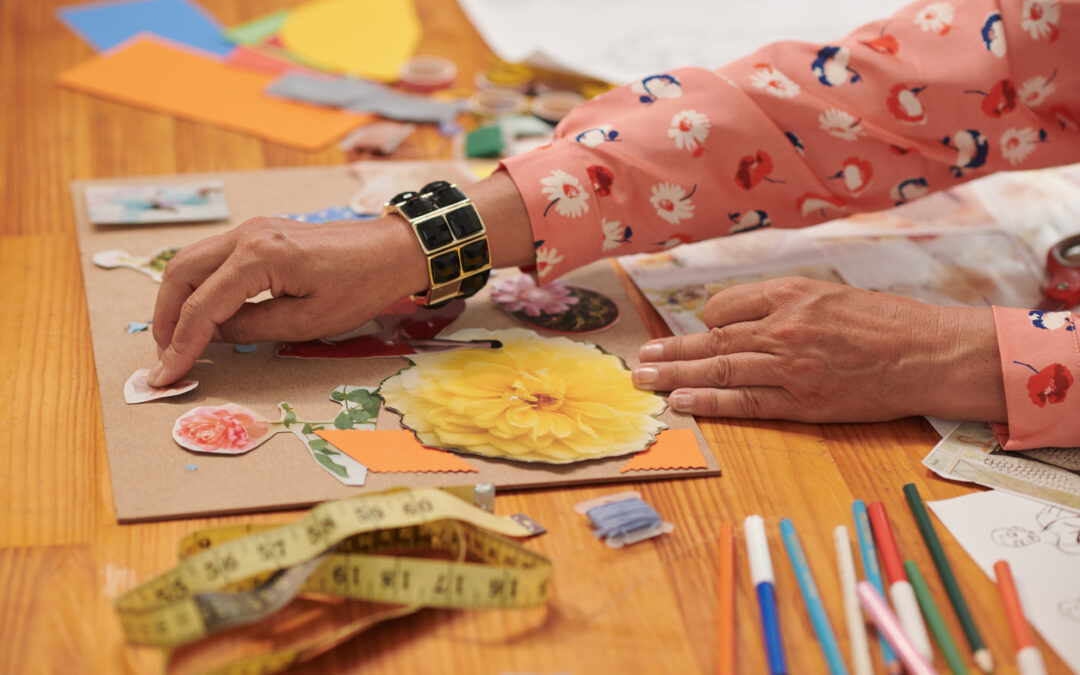
The healing journey can encompass many things: therapy, medication, mindfulness, exercise, healthy eating, and more. Each plays an essential role in recovery. But we shouldn’t overlook something just as powerful: Creativity.
The act of making something can have a huge impact on our mental wellbeing.
This doesn’t mean you need to finish a masterpiece or compose a symphony. You don’t need special skills or talents to create. You simply need a bit of curiosity and some brain power.
Creativity is the act of making a new connection. It’s not about painting a masterpiece; it’s about putting two things together in a way that is new to you. Whether that’s mixing a new spice into a recipe, finding a different route home to see the sunset, or choosing a specific color of ink to match your mood in a journal—that is a creative act.
In mental health, creativity acts as a bridge between the internal and external. When we are struggling, our feelings can feel like an invisible, tangled mess inside us. Creativity allows us to take a piece of that “mess” and put it outside of ourselves—onto a page, into a dance, or into a song.
Creativity isn’t a gift given to a few; it’s a toolkit built into everyone. Healing begins the moment you give yourself permission to play without needing a “good” result.
Creativity doesn’t require artistic talent or years of experience. It simply means making something—writing, drawing, cooking, gardening, dancing, crafting, taking photographs, playing music, or even rearranging a space in your home. Creative activities can offer a healthy way to process emotions, reduce stress, and reconnect with yourself.
Why Creativity Supports Mental Health
1. Creativity Helps Express Difficult Emotions
Some feelings can be hard to put into words. Anxiety, grief, sadness, stress, or frustration may feel overwhelming or difficult to explain. Sometimes, even joy can be challenging to describe.
Creative activities provide another language.
Writing in a journal, painting with colors that reflect your mood, or creating music can help externalize emotions rather than holding them inside.
2. Creative Activities Can Reduce Stress
Many creative hobbies encourage focus on the present moment, similar to mindfulness practices. When you’re immersed in knitting, sketching, woodworking, baking, or photography, your attention shifts away from racing thoughts and toward the activity in front of you.
This can create a calming effect and help lower stress.
3. Creativity Builds Confidence
Trying something new and seeing progress—even small progress—can boost confidence and create a sense of accomplishment.
Finishing a poem, growing a plant, completing a craft project, or learning a new recipe can remind us: I am capable of creating something valuable.
4. Creativity Encourages Joy and Connection
Creative hobbies often lead to social connection through classes, groups, clubs, or sharing interests with others. Social connection is an important protective factor for mental health.
Creativity can also help us rediscover joy during difficult times.
5. Creativity Exercises Your Brain
We know that using different parts of the brain can jumpstart emotional healing. Studies have shown that creating requires parts of the brain to work together.
Creativity is Attainable for Each of Us
It’s true that some people are more naturally creative than others. But, we can all encourage our brains to be more creative. Here are some ways to boost your creativity:
- Allow time for daydreaming
- Don’t focus on perfection—praise yourself for new ideas instead of worrying about their viability
- Be curious
- Spend time in nature
- Give yourself permission to be playful
- Take a walk
- Practice creativity (try some of the activities and prompts below)
Creativity Is About Process, Not Perfection
One of the biggest misconceptions about creativity is believing you have to be “good” at it.
You don’t.
Creative expression for mental wellness isn’t about producing something worthy of display—it’s about exploring, processing, and experiencing.
The goal isn’t perfection. It’s participation.
Creative Exercises to Support Mental Wellness
Looking for ways to bring more creativity into your routine? Try one of these simple activities:
✏️ 1. Emotion Drawing
Take a blank sheet of paper and ask:
“If my current mood had colors, shapes, or textures, what would it look like?”
Draw without judgment.
No artistic skill required.
1. The “Color of Your Day” Scribble
Goal: To externalize a mood without needing words.
-
The Prompt: Pick one color that matches how you feel right now. Grab a scrap piece of paper and just move the pen or crayon around. Don’t draw a shape or an object—just focus on the movement. Is it a jagged scribble? A soft, loopy circle? A heavy press of the pen?
-
The Healing Connection: This helps “vent” an emotion out of your body and onto the paper.
2. Found-Object “Altars”
Goal: To practice mindfulness and noticing beauty in the mundane.
-
The Prompt: Go for a five-minute walk (even just around your house) and collect three small things that catch your eye—a smooth stone, a fallen leaf, a colorful button, or a patterned piece of junk mail. Arrange them on a table in a way that looks “right” to you.
-
The Healing Connection: This grounds you in the present moment and reminds you that you have the power to create order and beauty out of small things.
3. The “Blackout” Poem
Goal: To lower the pressure of the “blank page.”
-
The Prompt: Take an old newspaper, a page from a recycled book, or even a junk mail flyer. Circle 5 to 10 words that jump out at you. Use a dark marker to cross out every other word on the page. The words that remain are your poem.
-
The Healing Connection: It shifts the creative process from “generating” to “discovering,” which is much less intimidating when you’re feeling overwhelmed.
4. The Five-Senses Snapshot
Goal: To engage the senses and break a cycle of repetitive thoughts.
-
The Prompt: If you could “capture” this exact moment in a jar, what would it look, smell, and feel like? Write down:
-
One color you see.
-
One texture you feel.
-
One sound you hear.
-
One scent in the air.
-
-
The Healing Connection: Sensory engagement is a classic “grounding” technique used to manage anxiety and stay in the “now.”
5. Kitchen Improvisation
Goal: To see everyday chores as an opportunity for play.
-
The Prompt: Next time you make a sandwich or a cup of tea, change one small thing. Use a different mug, cut the bread into a new shape, or add a garnish you usually save for “special” occasions.
-
The Healing Connection: It reinforces the idea that creativity isn’t a separate activity—it’s a mindset you can bring to your entire life.